


Demand for natural gas is rising both within the U.S. Northeast and in regions to its south and west. That incremental demand is spurring the development of a host of gas pipeline projects — small, medium and large — that collectively will enable Marcellus/Utica E&Ps to ratchet up their production year by year well into the 2030s. In today’s RBN blog, we continue our analysis of the new pipelines and pipeline expansions being planned to move more gas within — and out of — the U.S.’s largest gas production region.
This is the fourth blog in a series about gas market dynamics in the Northeast. In Part 1, we said that while the dramatic changes happening in Texas and Louisiana have garnered the most attention in the past year or two, the Appalachia market has been quietly evolving in ways that will not only shift flow patterns within the region but also affect flows to the Southeast, Midwest and Gulf Coast. Part 2 focused on gas demand within the Northeast, which is getting a big boost from the power-generation sector as coal retirements continue and data center development proliferates. In Part 3, we started a review of the pipeline projects being planned to enable more gas to flow through and out of the Marcellus/Utica to existing and new demand centers, focusing on projects in New England and New York.
Today, we continue that review. There’s no simple way to categorize most of the remaining projects. The best we can do is separate them into these five buckets: (1) projects within Pennsylvania; (2) regionwide enhancements; (3) projects tied to Mountain Valley Pipeline (MVP) and Transco; (4) expanded capacity to Ohio and beyond; and (5) projects that are more distant but still related to the Marcellus/Utica.
Projects within Pennsylvania
We’ll start with National Fuel Gas Co. (NFG), which is building two gas pipeline projects in the Keystone State and planning another. NFG is not familiar to everyone, so we should note that it is an integrated energy company that produces natural gas in north-central and northwestern Pennsylvania, owns and operates a gas pipeline network — National Fuel Gas Pipeline (NFGP; lime-green lines in Figure 1 below) — and the Empire Pipeline (magenta lines) and distributes gas to retail customers in northwestern Pennsylvania and western New York.
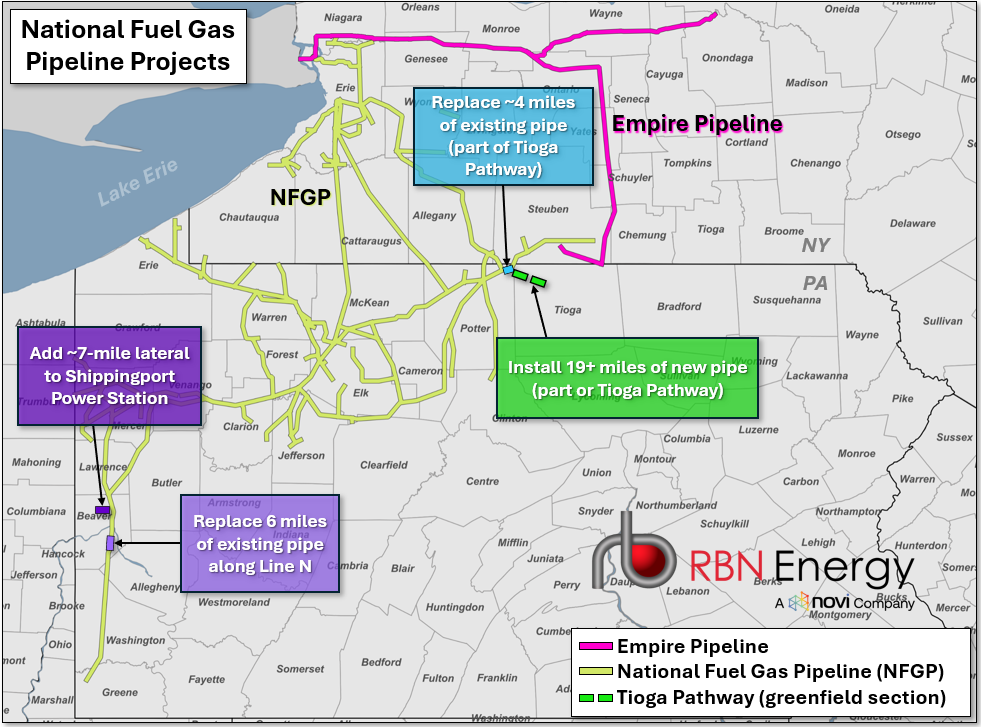
Figure 1. National Fuel Gas Pipeline Projects. Source: Novi Labs
Canadian Rig Counts: Gas Rigs Up Four, Oil Rigs Up Five, Both Above Prior Five-Year Highs
In Western Canada this week, the gas-directed rig count rose by four to 58 rigs, while the oil-directed rig count gained five to 119 rigs.
NFG this month is starting construction on two projects, both of which are scheduled to be completed in November:
- The $100 million Tioga Pathway Project includes the installation of more than 19 miles of new, greenfield pipeline (Line YM59; dashed kelly-green line and kelly-green box) across Tioga and Potter counties in north-central Pennsylvania; the replacement of about 4 miles of existing pipe on NFG’s adjoining Line Z20 (short blue line and blue box) in Potter County; and construction of an over-pressure protection (OPP) station where the YM59 and Z20 lines meet. (An OPP station is designed to prevent downstream pressure in the pipeline system from exceeding safe levels.) The project will provide about 190 MMcf/d of additional capacity.
- The $57 million Shippingport Lateral Project in western Pennsylvania’s Beaver County calls for the construction of a new, ~7-mile, 24-inch-diameter lateral off NFG’s existing Line N (short dark-purple line and dark-purple box) that will initially deliver up to 205 MMcf/d of gas to the massive Shippingport Power Station (now in the midst of being converted from coal to natural gas). The lateral’s capacity may be expanded later.
In April, NFG announced plans for the $93 million Line N System Upgrade Project, which will involve the replacement of mostly 1960s-era pipeline along a 6-mile stretch of Line N (short light-purple line and light-purple box) in Beaver County with new pipe that will enable a 94-MMcf/d increase in the pipeline’s capacity. The company said it had executed a precedent agreement for the project and plans to hold an open season for the balance of the project’s capacity this summer. The Line N System Upgrade Project is slated for completion in November 2028.
Next up in Pennsylvania are two related Enbridge projects designed to boost the capacity of the company’s Texas Eastern Transmission Co. (TETCO) pipeline system as it works its way across the state. The cumbersomely named Appalachia to Market II and Armagh and Entriken HP Replacement Project has three primary elements. The first involves adding about 2 miles of 36-inch looping pipeline alongside TETCO’s northern mainline in Lebanon County (red rectangles to right in Figure 2 below); that project will add about 55 MMcf/d of capacity. The two other elements involve upgrading (and adding horsepower) at two compressor stations along the northern mainline, one at Armagh and the other at Entriken (red ovals to left). Part of the work is already done; the rest will be finished by November.

Figure 2. Enbridge’s Appalachia to Market II and III Projects. Source: Novi Labs
The Appalachia to Market III Project along TETCO’s southern mainline is similar in scope. The project calls for replacing about 2 miles of 24-inch pipe in Adams and York counties with 36-inch pipe (orange rectangles to right), boosting the pipeline’s capacity by 32 MMcf/d. It also involves upgrading the southern mainline’s Bedford compressor station (orange ovals to left). Construction is expected to start in March 2027 and finish five months later.
Regionwide enhancements
As part of its May 1 earnings announcement, TC Energy unveiled plans for a $1.5 billion capacity expansion program called the Appalachia Supply Project. Few details were provided, but the project’s aim is to increase the supply of gas to new data centers and power projects across the company’s Columbia Gas Transmission (CGT) system (green lines in Figure 3 below), which runs through parts of Kentucky, Maryland, Ohio, Pennsylvania, Virginia and West Virginia. TC Energy said the multi-year Appalachia Supply Project is underpinned by a 20-year, take-or-pay contract with an unidentified utility and will add an initial 800 MMcf/d of capacity to the CGT system — and possibly up to 2 Bcf/d — by 2030, with the vast majority of the incremental gas to be used for power generation.
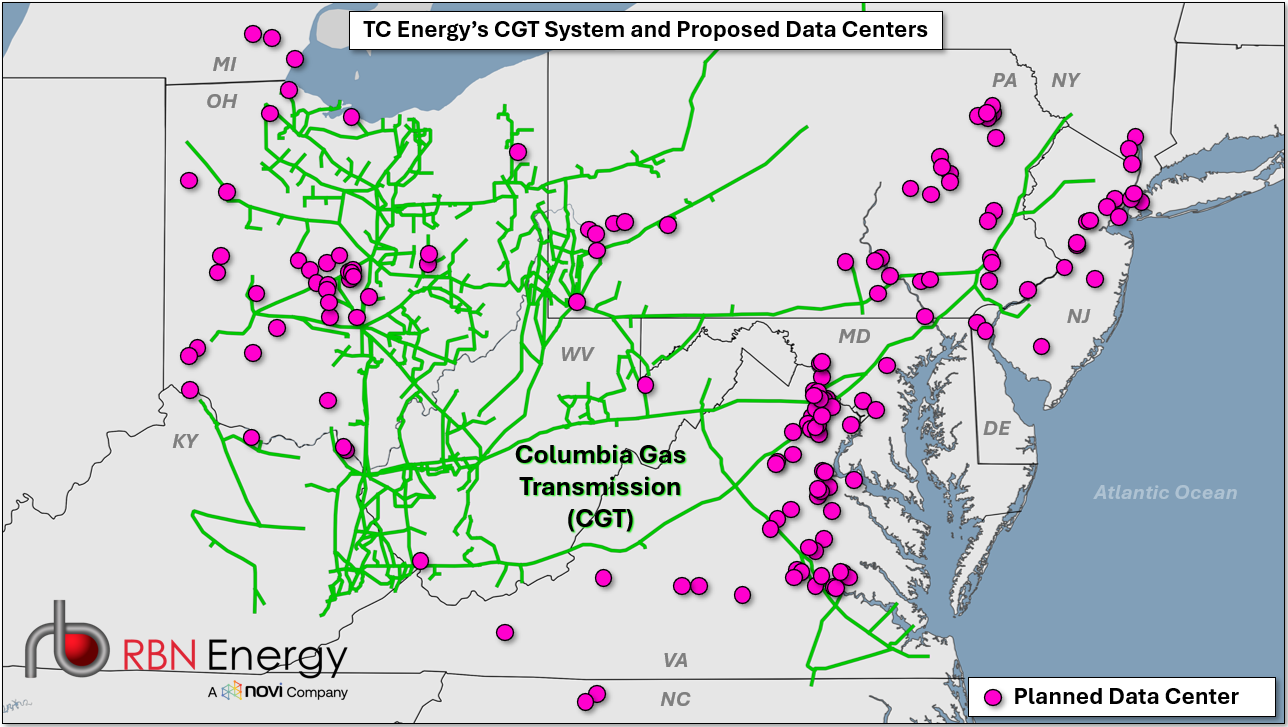
Figure 3. TC Energy’s CGT System and Proposed Data Centers. Source: Novi Labs
Most of the planned pipeline capacity increases are expected to be achieved by adding compression along the system; over time, that work may well be supplemented with pipeline expansions and laterals. In its announcement, TC Energy pointed out the dozens of new data centers (magenta dots) — or groups of them — being planned along or near CGT’s pipelines.
During the earnings call, TC Energy President and CEO François Poirier claimed that “Ohio’s projected natural gas demand growth of more than 30% over the next decade is the largest increase nationally outside of LNG-exporting states.” He added, “Growth is being driven by power generation, industrial expansion and grid reliability needs, including significant incremental load from more than 40 new data centers. ... What's important is not just the level of demand we’re seeing, but how we’re well positioned to capture it. We are intentionally strengthening connections across our systems, linking assets with access to premium low-cost supply.”
Projects tied to MVP and Transco
This next category includes several projects, a few of which we’ve discussed in previous blogs. For example, there’s the MVP Boost Project, which will expand the capacity of the 2-Bcf/d Mountain Valley Pipeline (MVP; aqua line in Figure 4 below) to 2.6 Bcf/d by mid-2028. (MVP runs from northern West Virginia to Transco Station 165 in southwestern Virginia.) The 600 MMcf/d of incremental capacity will be accomplished by adding compression at three existing stations in West Virginia and building a new compressor station in Montgomery County, VA.
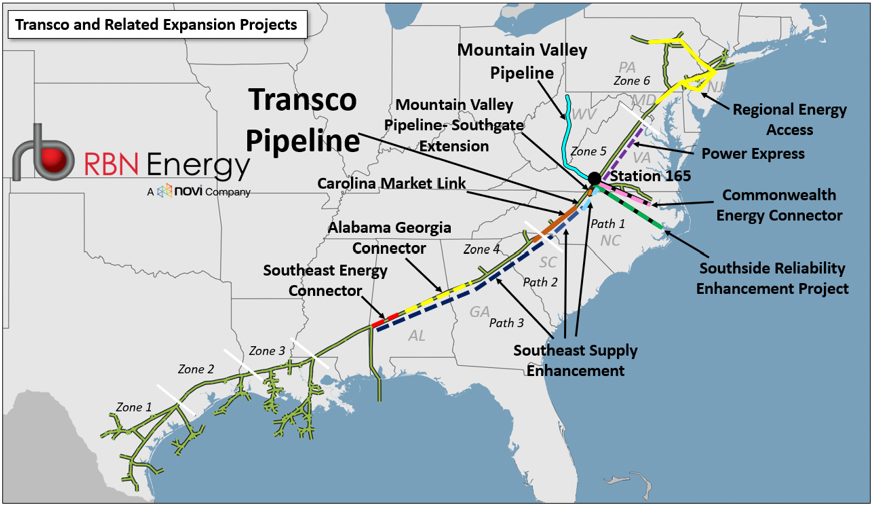
Figure 4. MVP, Transco and Related Expansion Projects. Source: Novi Labs
Several other ongoing projects along or off of Transco will help move gas from Station 165 (the southern terminus of MVP) to gas utilities, gas-fired power plants and other customers in the Southeast. These include Williams’s Power Express Project (dashed purple line), which will add 750 MMcf/d of capacity from Station 165 to the data center mecca in northern Virginia starting in Q3 2030. In addition, there’s the Southeast Supply Enhancement Project (SSEP), also by Williams, which via 55 MMcf/d of pipeline looping and other improvements will add a total of 1.6 Bcf/d of capacity along three paths, each extending south from Station 165. The first path will run to Station 160 in Rockingham County, NC (Path 1; dashed light-blue line); Path 2 will run to Station 145 in Cleveland County, NC (Path 2; dashed medium-blue line); and Path 3 (dashed dark-blue line) will run to Station 85 in Choctaw County, AL. The SSEP is scheduled to come online in Q4 2027.
There’s yet another project related to Station 165, this one being developed not by Williams but by MVP’s owners, which include EQT Corp. (the largest gas producer in the Marcellus/Utica), NextEra Energy, AltaGas and RGC Resources. The MVP Southgate Extension (short dashed orange-and-black line) is a planned 31-mile pipeline that would run south from Station 165 to Rockingham County, NC, and transport up to 550 MMcf/d to Enbridge Gas North Carolina and Duke Energy. Southgate Extension’s developers hope to bring the pipeline online in 2028.
In an upcoming blog, we’ll discuss the last two buckets of pipeline projects that will help to move increasing volumes of Marcellus/Utica-sourced gas to market. These include projects to Ohio and beyond — among others, the proposed Borealis Pipeline and Clarington Connector — as well as projects that are more distant but still intended to receive gas from Appalachia. We’ll also look at the impact that all of these pipeline projects will have on gas flows within and out of the Marcellus/Utica and on gas production in that massive basin.

About the song
“Movin’ Out (Anthony’s Song)” was written by Billy Joel and appears as the first song on side one of his fifth studio album, The Stranger. The song is about working-class New Yorkers struggling to achieve success in their lives. Joel said “Anthony” was a fictitious character. Released as a single in September 1977, the song went to #17 on the Billboard Hot 100 Singles chart and has been certified 2X Platinum by the Recording Industry Association of America (RIAA). Twyla Tharp produced a musical, Movin’ Out, based on the song, which played for 1,307 performances on Broadway at the Richard Rodgers Theater from 2002 to 2005. Personnel on the record were: Billy Joel (lead, backing vocals), Steve Kahn, Hiram Bullock (electric guitars), Doug Steinmeyer (bass, small block 1960s Corvette), Richie Cannata (saxophones), and Liberty DeVito (drums).
The Stranger was recorded in 1977 at A&R Studios in New York City and produced by Phil Ramone. Released in September 1977, it went to #2 on the Billboard 200 Albums chart and has been certified 12X Platinum by the RIAA. Five singles were released from the LP.
Billy Joel is an American singer, songwriter and pianist. Nicknamed “the Piano Man” after his 1973 hit single of the same name, Joel has had a successful career as a solo artist since the early 1970s. Born in the Bronx, Joel started playing piano at 4. He began his professional career playing piano bars while still in high school. His first rock band, The Hassles, made two albums for United Artists Records in 1967. Joel left The Hassles in 1969 and formed the duo Attila, which released one LP in 1970. He released his first solo album, Cold Spring Harbor, in 1971. Joel has released 13 studio albums, seven live albums, 19 compilation albums and 62 singles and has sold more than 150 million records worldwide. He has won an American Music Award, five Brit Awards, six Grammy Awards and a Tony Award, and was inducted into the Rock and Roll Hall of Fame in 1999. Joel, dealing with medical issues, made his last concert appearance at the Mohegan Sun Arena in Uncasville, CT, in February 2025. His last release was the single “Turn the Lights Back On,” which dropped in February 2024.
"About the Song" -- written by Mickey McMahan , RBN Director of Musicology


